




.svg)
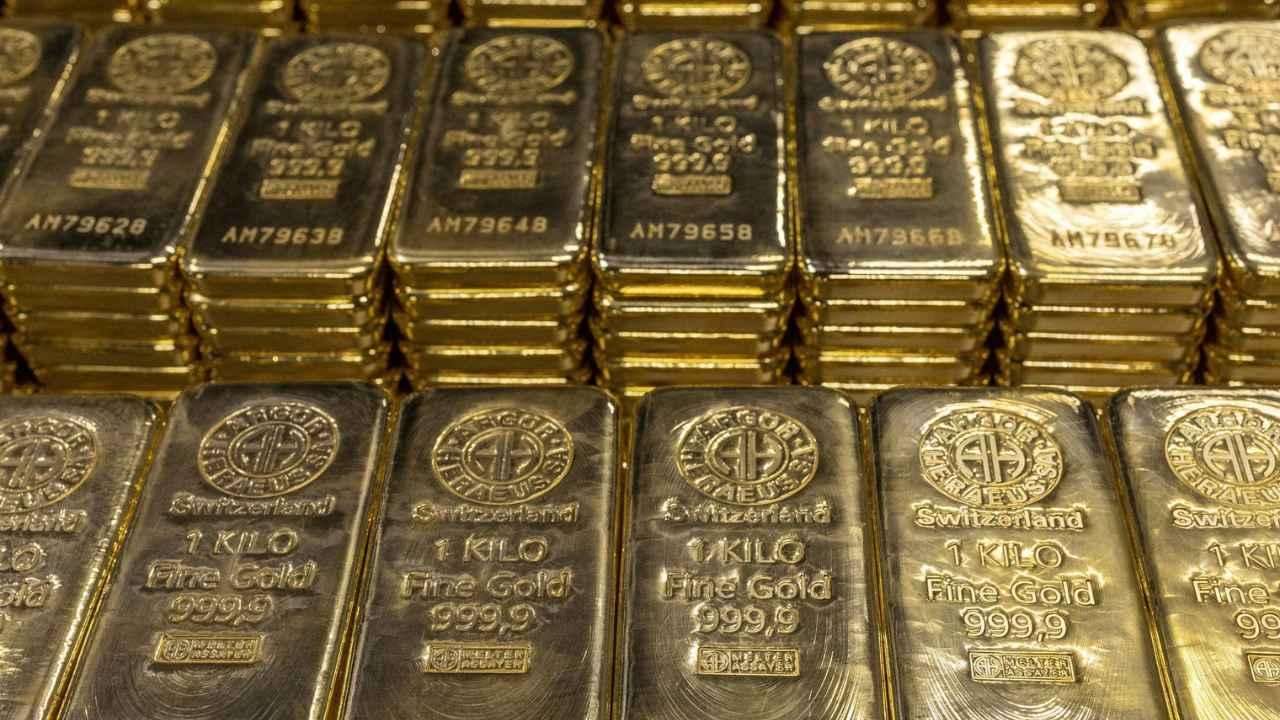
Gold prices climbed to their highest level in more than three months on Tuesday, reaching $4,651 (£3,410) an ounce during Asian trading as continued conflict in the Middle East and growing uncertainty over US economic policy drove investors towards the precious metal.
The rally puts gold on course for its strongest monthly performance in almost three decades. The metal has gained about 15% so far in August, despite briefly retreating after reaching Tuesday’s peak, underlining renewed demand for assets traditionally regarded as a store of value during periods of financial and geopolitical uncertainty.
Gold rises as investors seek protection
Gold has long been viewed as a safe-haven asset because investors often turn to it when political tensions, inflation risks or financial-market instability increase.
The latest surge comes as markets assess the continuing conflict involving the United States and Iran, while investors remain uncertain about the direction of US monetary and fiscal policy. Hopes earlier this month that Washington and Tehran were moving towards restoring a ceasefire and reopening the Strait of Hormuz failed to produce a breakthrough, yet the precious metal continued to strengthen.
Investors are now also awaiting fresh US inflation figures and a closely watched speech from Federal Reserve chair Kevin Warsh. His remarks are expected to receive particular attention as financial markets assess whether US inflation is proving persistent and how the Federal Reserve intends to respond.
Tony Sycamore, a market analyst at IG, said gold could remain supported by buyers seeking further gains, with the next significant resistance levels around $4,900 and $5,000 an ounce.
US policy uncertainty adds to demand
Gold’s latest advance is also being linked to concerns over US fiscal policy under President Donald Trump.
Trump has announced fresh tariffs on Canadian cars and key raw materials, adding to tensions between the United States and Canada. Washington has also threatened severe sanctions against countries or entities that continue maintaining economic ties with Iran.
Those developments have contributed to broader concerns about international trade, inflation and the future direction of the US economy. For investors, gold provides a way of seeking protection against several of these risks simultaneously.
Ipek Ozkardeskaya, a senior analyst at Swiss banking group Swissquote, said investors were increasingly viewing gold as a hedge against uncertainty surrounding US fiscal policy, inflation and concerns about the Federal Reserve’s independence in fighting price pressures.
There are also concerns among some investors that the rapid expansion of the artificial intelligence sector could eventually produce market distortions, creating another reason to hold assets outside conventional financial markets.
Gold’s extraordinary rise continues
The latest rally is part of a much larger increase in gold prices that began in 2025.
Gold’s major advance accelerated after Trump announced tariffs on imported goods, raising concerns about disruption to global trade and the potential economic consequences of a more protectionist US policy.
The metal broke through $4,000 an ounce for the first time last October before passing $5,000 in January. It subsequently reached a record high at the end of that month as investors responded to changes in US policy and political uncertainty in several major economies, including France and Japan.
However, gold’s rise has not been uninterrupted.
The price fell to about $3,942 an ounce in late June, even as conflict continued in the Middle East. That decline appeared unusual because geopolitical instability would normally be expected to increase demand for gold.
Analysts said the explanation was partly linked to the effect of the conflict on energy markets. Higher oil prices increased concerns about inflation and the possibility of higher interest rates, factors that can reduce the appeal of gold because the metal does not generate interest.
Bitcoin also climbs as dollar weakens
Gold was not the only major asset to benefit from the latest market conditions.
Bitcoin rose above $80,000 (£58,680) on Tuesday, reaching its highest level since mid-May. Analysts linked the cryptocurrency’s advance partly to weakness in the US dollar and some of the same forces supporting gold.
The simultaneous strength of gold and bitcoin highlights the extent to which investors are reassessing traditional expectations about the relationship between currencies, inflation, interest rates and alternative assets.
For gold, however, the immediate focus remains on the US economy, Federal Reserve policy and developments in the Middle East.
Daily Dazzling Dawn understands that the next major test for the precious metal will come as investors digest US inflation data and Kevin Warsh’s comments on the outlook for monetary policy. Any indication that inflation remains elevated, or that US fiscal policy could increase price pressures, could further influence demand for gold.
With gold already up about 15% in August, investors are now watching closely to see whether the metal can sustain its momentum towards the $4,900-$5,000 range or whether renewed pressure from interest-rate expectations will trigger another retreat.