






.svg)
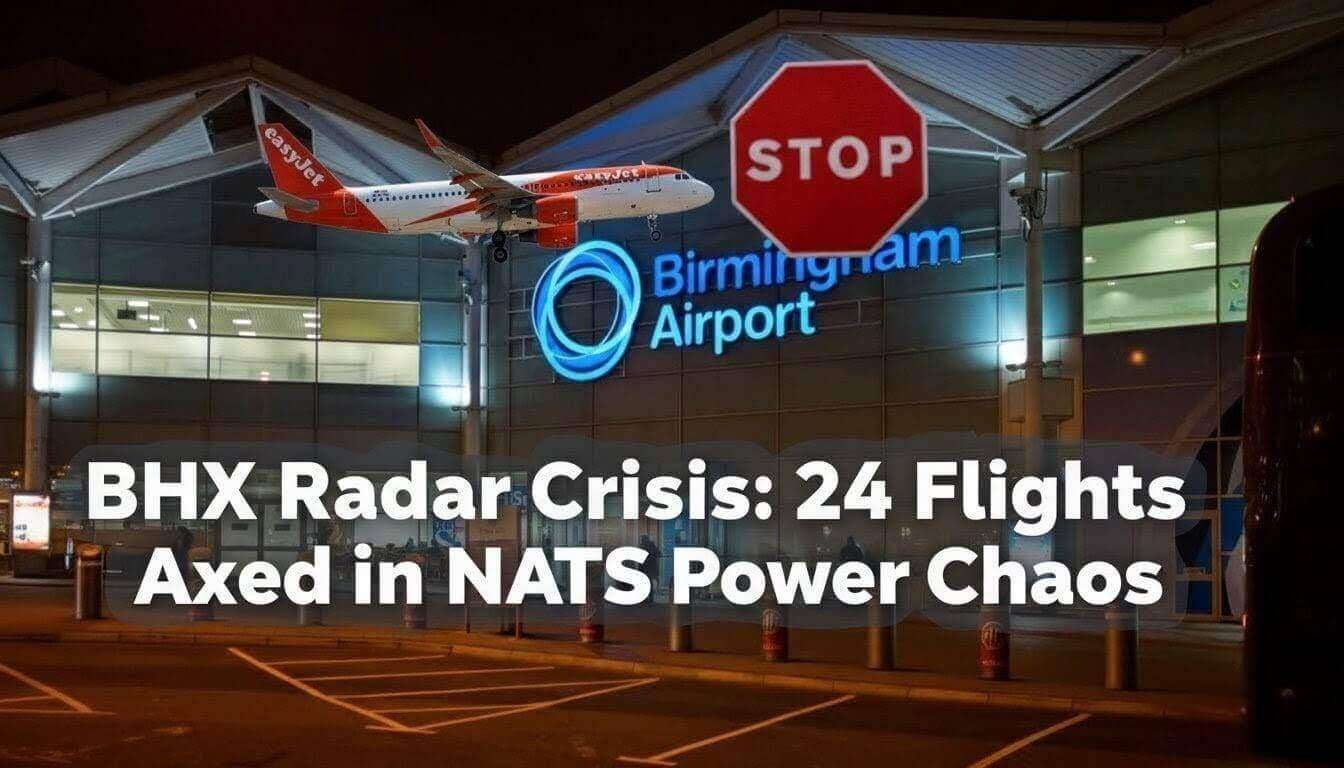
A localized atmospheric electrical storm has triggered a critical infrastructure failure at a National Air Traffic Service (NATS) radar facility, effectively severing the arrival lifeline for Birmingham Airport (BHX). While departing aircraft continue to utilize visual signaling and existing flight plans to exit the tarmac, the inbound corridor remains entirely blocked as engineers struggle to restore synchronization between the radar site and the National Grid, Daily Dazzling Dawn understands.
The disruption has already rippled through the regional flight schedule with devastating efficiency. As of 2:00 AM, the total number of scrubbed operations has climbed to twenty-four confirmed cancellations, a sharp escalation from earlier evening estimates. This figure includes a mix of short-haul European shuttles and domestic links that have been forced to remain at their origin airports. Furthermore, eighteen diverted airframes are currently scattered across alternative hubs including East Midlands and Manchester, as pilots were forced to execute mid-air holds before fuel reserves reached critical levels.
This latest system collapse highlights a recurring vulnerability within the United Kingdom’s civil aviation backbone. While NATS officials have pointed to "poor weather" as the primary catalyst for the current blackout, the incident mirrors a troubling pattern of technical fragility that has plagued the sector since the massive Heathrow substation failure last March. That previous catastrophe, which displaced over a quarter of a million travelers, established a grim precedent for how localized power anomalies can paralyze national transit networks.
Dazzling Dawn Deeper Analysis: The Fragility of the British Skies-The fundamental question lingering over the Birmingham tarmac is why a singular weather event can deactivate the primary safety apparatus of an international hub. The "Dazzling Dawn" investigation into this outage reveals that the issue is not merely a blown fuse, but rather a failure in the seamless transition to uninterruptible power supplies (UPS) that are supposed to insulate air traffic control from grid instability.
While Birmingham is the epicenter of tonight's crisis, other UK airports remain on high alert as the same weather system moves across the Midlands. Reports from Luton and Stansted indicate minor delays, though their primary radar systems remain operational for now. The root cause appears to be a systemic reliance on aging hardware that lacks the "fault-tolerant" architecture seen in more modern global hubs. When NATS CEO Martin Rolfe previously attributed a massive 2,000-flight cancellation event to a single piece of "uninterpretable" flight data, it signaled to the industry that the UK’s air traffic software and hardware are operating on razor-thin margins.
Tonight’s Birmingham blackout serves as a stark reminder that until the National Grid and NATS finalize a comprehensive "hardened" infrastructure project, the British holidaymaker remains at the mercy of a single lightning strike or a momentary voltage drop. The economic impact of tonight’s twenty-four cancelled flights alone is expected to reach into the millions when factoring in passenger compensation and airline repositioning costs.

.jpeg)