




.svg)
Global financial markets extended their losses on Wednesday, even after Donald Trump said the US Navy could escort oil tankers through the Strait of Hormuz and US officials claimed Iranian naval activity in the area had ceased.
The escalating Middle East conflict has effectively shut down the vital waterway following US and Israeli strikes on Iran over the weekend, intensifying concerns about a prolonged global energy supply disruption.
David Solomon, CEO of Goldman Sachs, warned it could take “a couple of weeks” for investors to fully assess the consequences of the US-led military action. Speaking in Sydney, he noted that while markets often respond calmly to geopolitical tensions, the scale of this development could carry broader economic implications.
Asian markets faced sharp declines. Trading in Seoul was temporarily halted after South Korea’s Kospi index plunged as much as 11.3% before recovering slightly to trade down 7.7%. Japan’s Nikkei 225 dropped 3.9% in Tokyo. Meanwhile, oil prices continued their upward climb.
US Central Command reported destroying 17 Iranian vessels, including a submarine, since Saturday. Commander Brad Cooper stated that no Iranian ships were currently operating in the Arabian Gulf, Strait of Hormuz, or Gulf of Oman.
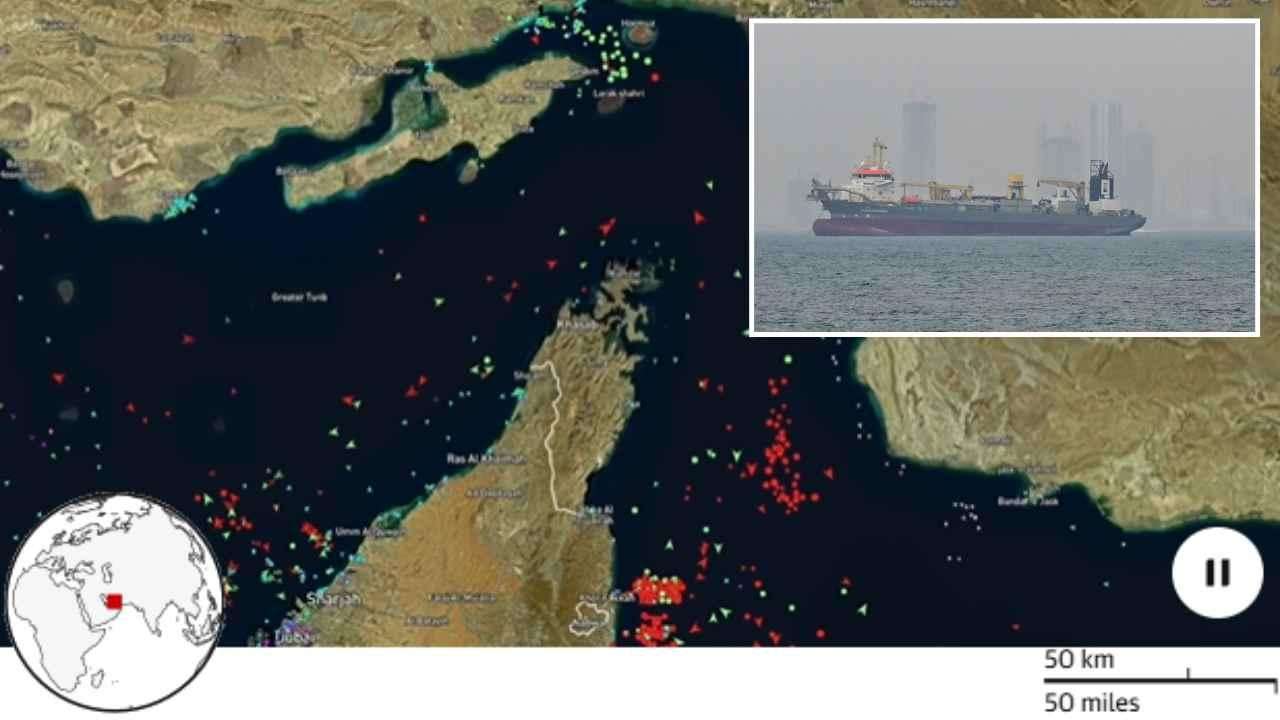
The Strait of Hormuz — a critical global energy corridor through which roughly 20% of the world’s oil and significant volumes of liquefied natural gas pass — has seen shipping activity largely grind to a halt.
In an effort to calm markets, Trump said the US military was prepared to safeguard commercial vessels and even offer political risk insurance at competitive rates. Writing on Truth Social, he pledged that the United States would ensure the “free flow of energy” worldwide and would begin escorting tankers if necessary.
Brent crude, the global oil benchmark, continued rising after reaching its highest level since January 2025 earlier in the week. It climbed another 1.4% on Wednesday to $82.53 per barrel as traders anticipated supply constraints.
The United Kingdom Maritime Trade Operations agency also reported incidents involving vessels near the UAE and Oman, heightening fears about maritime security in the region.
In the US, Wall Street was expected to open lower based on pre-market indicators. Trump, who frequently points to stock market performance as a measure of his administration’s success, faces mounting pressure as volatility increases.
Solomon added that while immediate reactions have been relatively restrained, markets may take time to evaluate the short- and medium-term economic impact of the conflict, declining to predict how the situation might ultimately unfold.