



.svg)
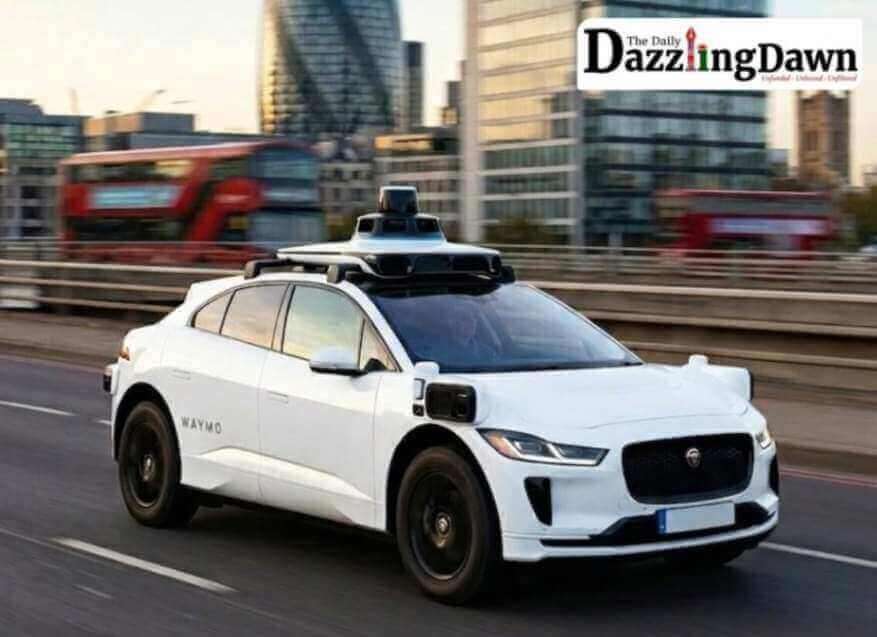
The capital’s asphalt is currently the site of a profound digital mapping project that may soon render the professional driver an artifact of the past, Daily Dazzling Dawn understand. While the hum of electric Jaguar I-Paces navigating the labyrinthine streets of London has become a familiar sight, the transition from experimental testing to commercial reality is triggering a massive legislative and social confrontation. As of late April 2026, Waymo has escalated its operations, transitioning from manual "mapping" drives to active artificial intelligence control across a 100-square-mile radius of the city. However, the true friction is not occurring on the roads, but in the halls of Westminster and the digital forums of the UK’s gig economy.
A surging petition, currently nearing 10,000 signatures, has been directed to the Secretary of State for Transport, Heidi Alexander. It calls for an immediate moratorium on the proposed September 2026 commercial rollout. The movement, spearheaded by the Organise platform, highlights a stark disconnect: while technology firms boast "superhuman" perception, the human workforce feels entirely invisible. "We are not against progress; we are against being replaced overnight without a conversation," a representative told journalists, emphasizing that 93% of the current driver pool views the autonomous shift as an existential threat rather than an evolution.
The strategic landscape is becoming increasingly crowded. Beyond Alphabet-owned Waymo, the domestic contender Wayve is leveraging its Oxford-based research to challenge the American dominance, while Uber—once the primary benefactor of human contractors—is pivoting its infrastructure to support driverless fleets. This corporate alignment suggests a "fait accompli" that the government has yet to officially sanction. High-ranking industry sources told journalists that the "Core driving AI is generalizing well," yet public sentiment remains stubbornly rooted in skepticism. Recent polling indicates that 85% of Londoners would still bypass a robotaxi for a human-piloted vehicle if costs were equal, citing a fundamental lack of trust in "black box" decision-making during urban emergencies.
Safety remains the primary weapon in the corporate arsenal. Waymo representatives told journalists that their "Driver" was involved in 92% fewer crashes resulting in serious injury compared to human-operated vehicles. Yet, for the Transport Department, the metrics for approval are shifting. The government is under intense pressure to publish an independent safety review that goes beyond the data provided by the companies themselves. Critics argue that "simulation performance" does not account for the unpredictability of London’s "local nuances"—the aggressive cycling culture, the erratic pedestrian flows, and the seasonal weather that can baffle even the most sophisticated sensors.
What happens next is a high-stakes regulatory gamble. The Automated Vehicles Act provided the framework, but the specific trial program regulations are still being finalized. Insiders suggest that the government may be forced to implement a "Fair Transition Plan," a move that would mandate tech giants to contribute to a retraining fund for the hundreds of thousands of drivers whose livelihoods are currently on the line. As September 2026 approaches, the quiet streets of London are likely to become a global litmus test for whether a modern city can integrate autonomous efficiency without sacrificing its human social contract.