.jpg)
.jpg)

.jpg)


.svg)
Bangladesh has never been in an ideal
position regarding public trust in the media. The country has consistently
scored below average on all indicators of trustworthy journalism. The lack of
credibility steadily declined from 2009 to 2024, during Sheikh Hasina’s time in
power, and remained almost unchanged after her departure too.
However, as the country renews its push
toward democracy, improving public trust in the media becomes crucial for the
health of democracy itself. To achieve this fundamental but vital goal, we
first need to examine the reasons behind the public’s mistrust of the media.
Looking at the Sheikh Hasina regime as a case study, we can identify several
external and internal factors that contributed to this distrust: political
influence and legal restrictions, self-censorship and fear among journalists,
misinformation and inadequate verification systems, and internal weaknesses
within media organisations.
Deeper analysis reveals numerous national
and international reports linking the decline of media credibility to reduced
press freedom. During this period, Bangladesh dropped 44 places on the World
Press Freedom Index, ranking 165th out of 180 countries in 2024—one of its
lowest standings. Critics also cite the political control over the media as a
major factor affecting credibility. They point to systematic suppression and
punishment of journalists as the government used laws and licensing to sway
coverage, along with economic pressure.
The Digital Security Act (2018) was one
of the most controversial tools deployed during this regime. Its vague
provisions and harsh penalties were used to arrest, detain, or intimidate
journalists and online critics. Widely criticized, this draconian law fostered
an atmosphere of fear and self-censorship, hindering investigative journalism
and critical reporting.
Due to political, financial, and legal
risks, journalists often avoided sensitive topics. Newsrooms became more
cautious or selective in their reporting. Sometimes, the fear of punishment
influenced editorial decisions. Self-censorship emerges as one of the biggest
hidden threats to credibility, as audiences can detect incomplete or biased
coverage.
The result was a significant decline in
public trust in mainstream media, especially among younger audiences.
Consequently, the media industry expanded, but public confidence diminished.
Audiences increasingly turned to social media and other sources. However, these
platforms also spread misinformation, further worsening the trust crisis. Thus,
a paradox arose: people did not trust mainstream media but also couldn’t fully
trust alternative sources.
I must acknowledge that these reasons
amplified concerns about the independence, transparency, and trustworthiness of
the media in Bangladesh during Sheikh Hasina’s regime. However, as a
journalist, I want to highlight an internal issue that played a key role during
that period and continues to hinder the change we all desire in the media: the
sense of accountability.
During my time working in Bangladesh, I
observed just how severe the lack of accountability among journalists and
editors truly is. First and foremost, we must accept—without condition—that it
is our professional and moral duty to report news accurately, fairly,
ethically, and transparently. We are answerable to the public for this
responsibility, and our aim in journalism is solely to serve society by
informing people truthfully.
We all understand that if we hold ourselves accountable for what we say, write, and do, we can effectively address many internal problems—such as ownership tied to business or political interests, weak editorial independence, sensationalism, and the rush to be first rather than right—all in an effort to preserve our credibility and the sustainability of our profession that supports our livelihoods.
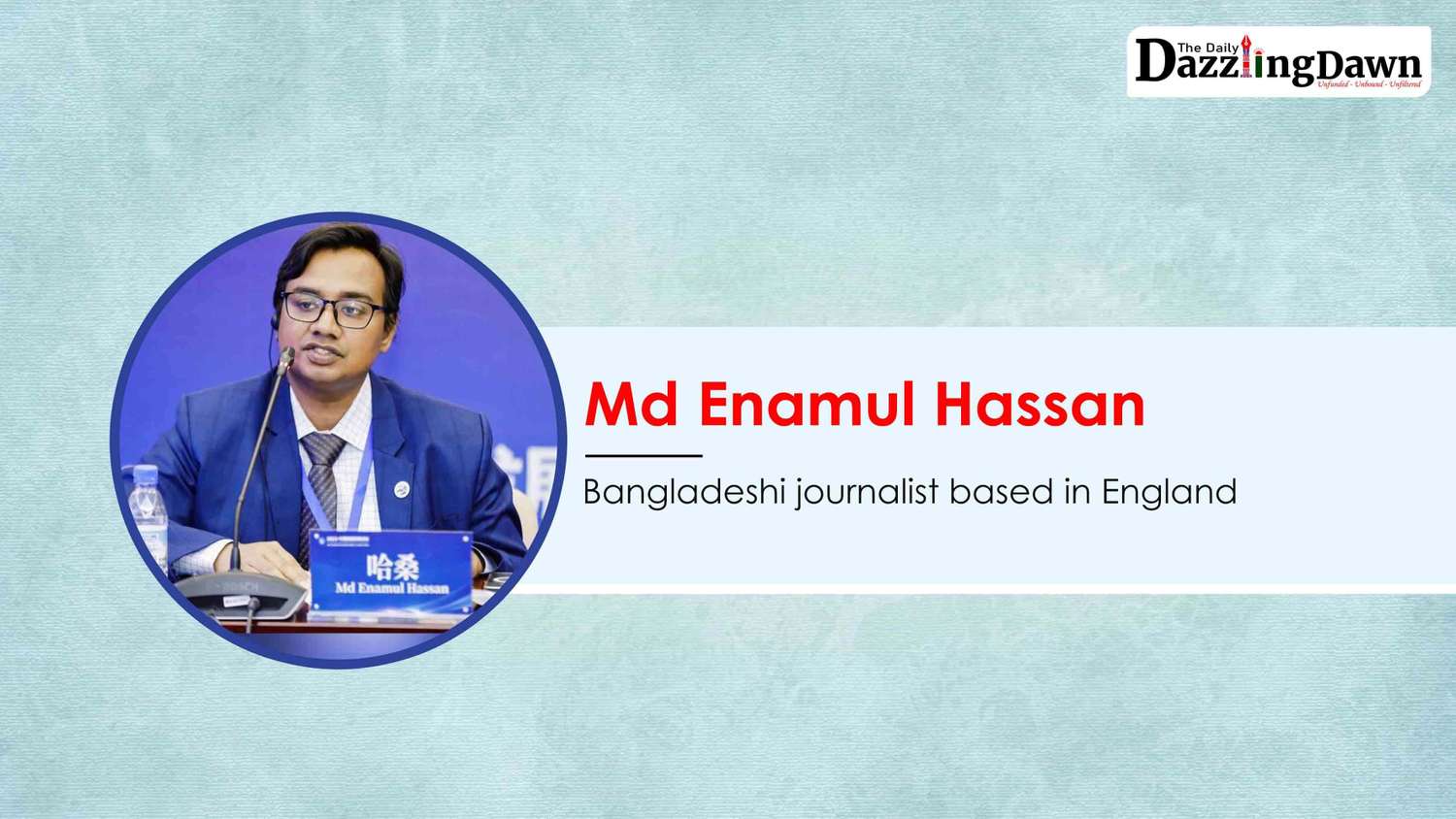
Md Enamul Hassan is a Bangladeshi
journalist based in England and a member of the National Union of Journalists
in the UK.