






.svg)
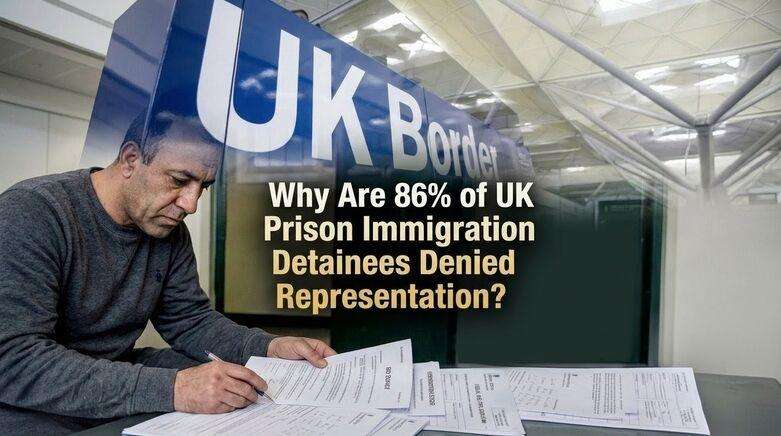
A comprehensive legal audit released on 20 August 2026 reveals that an overwhelming 86 per cent of individuals held under immigration powers across United Kingdom prisons are currently navigating complex deportation proceedings without legal representation. The findings, published in a sixteen-page research dossier by the charity Bail for Immigration Detainees (BID), demonstrate that state-mandated legal safeguards introduced following the landmark High Court ruling in SM v The Lord Chancellor's Department [2021] EWHC 418 (Admin) are failing to protect vulnerable detainees. The extensive investigation examined twenty-three detained individuals held across fifteen separate custodial facilities, alongside administrative data requested from forty-four prisons across England and Wales.
Daily Dazzling Dawn understands that only three individuals surveyed had secured a legal representative for their immigration case, with two of those cases reliant on direct charitable intervention. Two-thirds of all respondents reported entirely unsuccessful attempts to instruct a solicitor, citing acute legal aid shortages, unreturned correspondence, systemic institutional inertia, and prohibitive private legal costs. The failure to secure representation leaves foreign nationals detained under administrative immigration powers isolated in secure custodial environments, often unable to challenge prolonged detention or prepare complex statutory representations against removal.
The High Court ruling in SM v The Lord Chancellor's Department established an affirmative obligation on the Ministry of Justice and HM Prison & Probation Service to eliminate structural disparities between immigration removal centres and mainstream prisons. Under current interim policy instructions, custodial establishments must actively provide detainees with comprehensive legal aid literature, verified directories of local immigration practitioners, facilitated access to thirty minutes of publicly funded legal advice, and a statutory five-pound weekly telephone credit allowance to contact legal representatives.
However, the empirical evidence gathered by researchers demonstrates that these interim safeguards remain largely theoretical inside the penal estate. Out of nine prison administrations that submitted formal responses to the legal inquiry, not a single custodial institution confirmed that it had successfully implemented the full suite of mandatory policy requirements. HM Prison & Probation Service staff frequently exhibited limited awareness of the statutory standards, resulting in widespread administrative non-compliance across the custodial estate.
The practical hurdles faced by detainees attempting to contact solicitors are severe and multifaceted. Only four survey participants confirmed receiving informational guidance regarding legal aid entitlements, while just 40 per cent were supplied with an official directory of legal practitioners. Among those supplied with documentation, 62 per cent discovered that the provided rosters contained practitioners who did not handle legal aid immigration work.
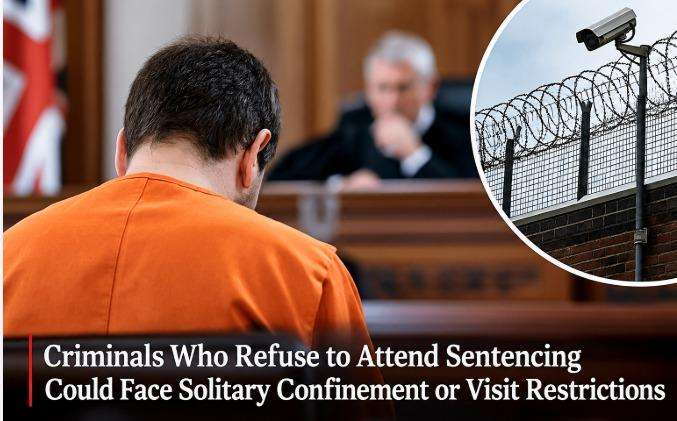
Criminals Who Refuse to Attend Sentencing Could Face Solitary Confinement or Visit Restrictions
Furthermore, communication infrastructure inside the establishments remains severely restricted. Just 29 per cent of respondents who attempted to telephone numbers provided by custodial authorities succeeded in speaking with an operative, with the vast majority of successful connections leading solely to charitable support networks rather than regulated legal practices. Interpretation provisions were similarly deficient, with the overwhelming majority of non-English speakers receiving no statutory language support to understand their legal status or lodge urgent bail applications.
The prolonged absence of legal advocacy has caused documented deterioration in the health and wellbeing of detained individuals, several of whom reported severe mental health relapses, post-traumatic stress, and complete despair while attempting to draft their own legal defences against deportation directly to Immigration Enforcement. Without trained legal counsel, detainees face substantial disadvantages when lodging human rights representations or challenging the lawfulness of their continued administrative detention.
Speaking to journalists, Charlotte Buckley, Director of Bail for Immigration Detainees, emphasised that access to professional legal advice serves as the definitive structural safeguard between lawful liberty and indefinite incarceration. The organisation is now formally demanding that the Home Secretary and the Lord Chancellor commission an immediate, independent statutory inspection into prison-based immigration legal advice. Legal advocates have urged the government to urgently replace the dysfunctional interim measures with an enforceable, fully funded policy framework that guarantees equal access to justice across all custodial settings.



.jpeg)




.jpg)