





.svg)
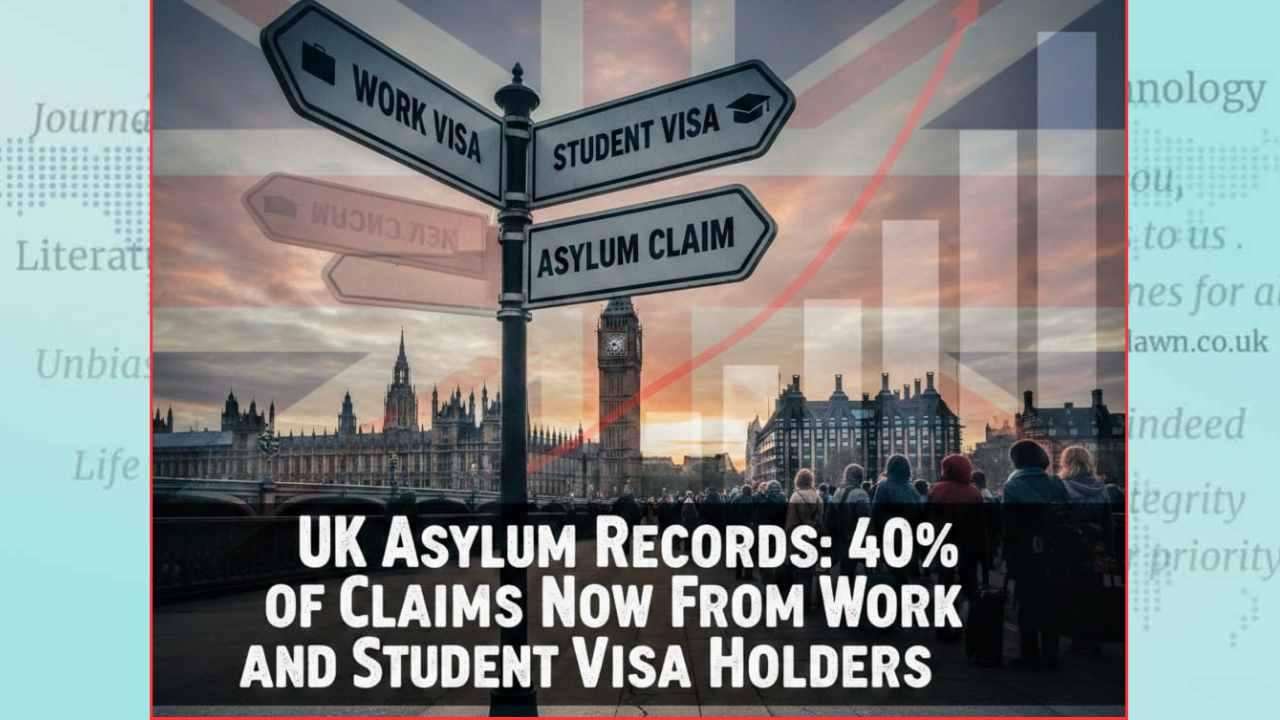
The UK's immigration landscape is undergoing a significant transformation as new Home Office data reveals a sharp rise in asylum claims from individuals who initially entered the country on legal work and study visas. In the year ending September 2025, a record-breaking 110,051 people claimed asylum in Britain, marking a 13% increase from the previous year. Most notably, nearly 40% of these claimants—approximately 41,500 people—had previously held a valid visa or permit, suggesting a growing trend of "visa switching" to secure permanent residency. Within this group, student visa holders led the surge with 14,243 claims, while work visa holders followed closely with 13,427 applications, representing a dramatic shift from historical norms where such claims rarely exceeded 1,000 per quarter.
This trend has ignited a fierce political debate over the integrity of the UK's points-based immigration system. Critics argue that the ease with which individuals can transition from temporary work or study routes into the asylum system indicates widespread "industrial-scale" abuse. Shadow Home Secretary Chris Philp has called for significantly stricter pre-entry checks and a tightening of the asylum process to filter out what he describes as fabricated claims. Meanwhile, the Migration Advisory Committee (MAC) has cautioned the government on the economic trade-offs involved in further raising salary thresholds for skilled workers, noting that recent restrictions have already contributed to a decrease in net migration, which fell to 204,000 in the year to June 2025.
Geographically, the demographic of asylum seekers is dominated by five key nations. For the first time, Pakistan has emerged as the leading country of origin, accounting for 11% of all claims in the year to September 2025. This is followed by Eritrea (8%), Iran (7%), Afghanistan (7%), and Bangladesh (6%). Bangladesh has seen a steady presence in the top ranks over the last five years, with recent figures placing it as the fifth most common nationality for asylum seekers. Official data confirms that South Asian countries, particularly Pakistan and Bangladesh, have seen consistent increases in applications, often linked to shifting political climates and economic instability in those regions.
The Home Office maintains that it operates a robust system, pointing to the introduction of visit visa requirements for high-risk countries as a successful deterrent. According to a government spokesperson, these targeted measures have reduced asylum claims from certain nationalities by as much as 93%. However, the sheer volume of claims—which reached an all-time high in 2024 and 2025—continues to strain the system. Despite efforts to clear the backlog, which fell 54% from its 2023 peak, over 62,200 cases still await an initial decision. As the government prepares the new Border Security and Asylum Bill, the focus remains on balancing the need for skilled international labor with the necessity of maintaining a secure and credible asylum border.