





.svg)
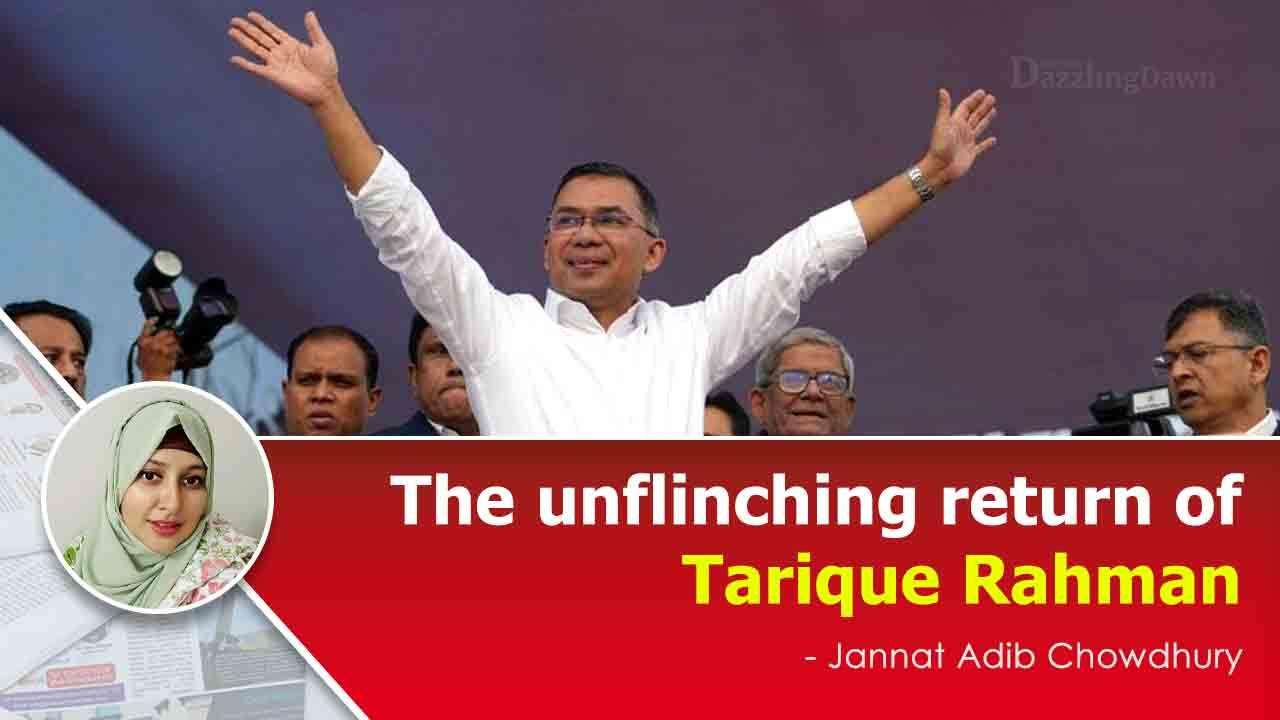
After 17 years in exile, Tarique Rahman’s return to Dhaka signifies a new era in the political climate of Bangladesh in the backdrop of General Election scheduled for February 2026. What he said in the mass reception held for him markedly showcases an unflinching and steadfast approach to the promise of contributing to build-up of democracy in the country. His markedly calm demeanor during his speech also signals a shift in the way the political narratives were being told in the past fascist regime as well as to how some youth leaders have also spoken in seminars and rallies in recent times.
Back in 2008, Tarique Rahman faced overwhelming odds following severe torture and punishment by the then military backed caretaker government which to some degree caused him life-altering injuries. It would not have been a matter of contention, if he had uttered some words of contempt against his adversaries. Rather, he spoke of a plan to implement for the people of his country. Building on the sacrifices made by freedom fighters in 1971 to revolution in 1975 to uprising against autocracy in 1990 to ultimately student led uprising in 2024, he unified the deep desire for democracy of the people of Bangladesh across generations.
He made appeals to Bangladeshis on the ground of religious unity. His rhetoric sharply included on the fact that the country has diverse segments of populations. Starting from women, youth, children and physically disabled. He also highlighted that the country is as much is for Bangladeshis of the plain lands as it is for indigenous communities.
Throughout his words and tone, peace was the central thread. He spoke earnestly about harmony, discipline, and the responsibility that comes with leadership. With deep reverence, he honored Osman Hadi and the July martyrs, paying tribute without turning remembrance into triumph. He was careful not to claim victory, reminding the nation that whoever wins carries a far greater duty: to lead the country toward prosperity, peace, and safety for all.
Safety, he emphasized, must belong to everyone without exception. Drawing inspiration from Martin Luther King, he declared that he, too, has a plan not just a vision, but a commitment to action. He closed his speech with a heartfelt call for peace and discipline, urging citizens to protect the fragile hope before them.
Now, the nation watches closely. Words alone are not enough; plans must be transformed into collective action. The true test lies ahead, and the people wait; hopeful, cautious, and ready—to see whether this promise becomes reality.